

Simpler Recycling 2025 Complete Business Guide
From 1 April 2025, Simpler Recycling regulations require every UK business with 10 or more employees to separately collect food waste.
If you have not already made changes to how your organisation handles organic waste, you are now legally required to do so. This guide explains exactly what the regulations require, who they apply to, what the penalties are, and — most importantly — how on-site composting with the Schnell Komposter is the cleanest, most cost-effective way to comply.
What Is Simpler Recycling?
Simpler Recycling is a UK government policy framework introduced under the Environment Act 2021, designed to standardise recycling and waste collection across England. The policy has several phases, with the food waste separation requirement for businesses being one of the most significant.
The policy name reflects its core ambition: to make recycling simpler and more consistent, so that all households and businesses across England follow the same rules regardless of their local authority area.
Under Simpler Recycling, all eligible businesses must ensure food waste is:
- Collected separately from general waste
- Not mixed with other recyclable materials
- Sent for recycling or composting — not landfill
Who Does It Apply To?
From April 2025, Simpler Recycling food waste separation applies to:
- All businesses in England with 10 or more employees that produce food waste
- This includes restaurants, hotels, cafés, pubs, schools, hospitals, care homes, offices with canteens, country estates with catering operations, golf clubs, shopping centres and any other organisation generating food waste
- From April 2026, the requirement extends to all households via local authority collections
Businesses with fewer than 10 employees are currently exempt, though many local authorities are encouraging smaller businesses to comply voluntarily.
Important: The regulations apply in England. Scotland, Wales and Northern Ireland have separate but broadly similar food waste regulations already in force in some areas.

What Exactly Must You Do?
The core requirement is straightforward: food waste must be kept separate from the point of generation. In practice this means:
Option 1: Food Waste Collection Contract
Sign a contract with a licensed waste management company for separate food waste collection. The contractor collects your food waste in a dedicated caddy or bin and takes it to an anaerobic digestion or composting facility. You continue to pay landfill tax (£126.15/tonne in 2025–26), collection fees and any transport surcharges.
Option 2: On-Site Composting (Recommended)
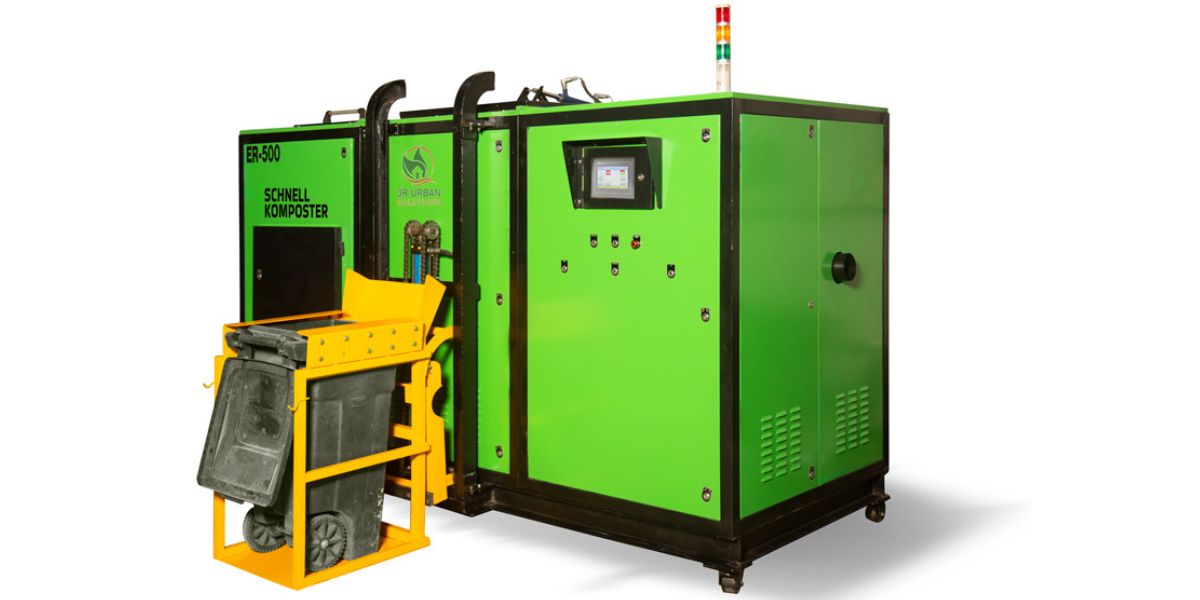
Process your food waste on-site using an in-vessel composting machine such as the Schnell Komposter. This satisfies the separation requirement completely — food waste is separated at source and composted on your premises — while also eliminating landfill tax and collection costs entirely. The compost output is used on your own grounds, completing a genuine circular economy loop.
On-site composting is the only approach that satisfies Simpler Recycling while simultaneously removing all ongoing disposal costs.
What Counts as Food Waste Under the Regulations?
Food waste includes any organic material that has been used or is surplus from food preparation and consumption. This covers:
- Plate scrapings and leftover cooked food
- Raw food preparation waste (vegetable peelings, eggshells, fruit skins)
- Stale bread, pastries and baked goods
- Dairy products
- Raw and cooked meat and fish
- Coffee grounds and tea bags
- Fruit and vegetables in any condition
Food waste does not include packaging, paper napkins, cutlery or any non-organic material — these must be separated into appropriate recycling or general waste streams.
What Are the Penalties for Non-Compliance?
Businesses that fail to comply with Simpler Recycling food waste separation requirements can face enforcement action from their local authority. Penalties include:
- Fixed penalty notices
- Compliance notices requiring corrective action within a set timeframe
- Escalating fines for continued non-compliance
Beyond financial penalties, non-compliance creates reputational risk — particularly for businesses in hospitality, tourism and food service where sustainability credentials are increasingly scrutinised by customers, corporate clients and booking platforms.
How Does On-Site Composting Satisfy the Regulations?
The Simpler Recycling regulations require that food waste is separately collected and sent for recycling or composting. On-site composting with the Schnell Komposter satisfies both conditions:
- Separately collected: food waste goes directly into the Schnell Komposter’s loading chamber — it is completely separated from general waste at source
- Sent for recycling or composting: the food waste is composted on your premises, producing Grade-A compost — this is a genuine recycling outcome, not disposal
You should keep records of your composting activity (volumes processed, compost produced) for audit purposes. The Schnell Komposter’s cloud monitoring and HMI data logging make this straightforward — every cycle is automatically recorded.
The Financial Case: On-Site Composting vs Collection Contract
| Cost Component | Food Waste Collection Contract | Schnell Komposter On-Site |
|---|---|---|
| Landfill tax (200 kg/day) | £8,578/year ✗ | £0/year ✓ |
| Collection fees (200 kg/day) | £8,160/year ✗ | £0/year ✓ |
| Machine electricity cost | N/A | ~£1,500–£2,500/year |
| Compost output value | None | Grounds/garden use saves fertiliser cost |
| Total annual saving vs collection | — | ~£14,000–£16,000/year |
Example based on 200 kg/day, 340 operating days. Landfill tax at £126.15/T (HMRC 2025–26). Collection at £120/T average UK rate.
What Records Do You Need to Keep?
While the regulations do not prescribe a specific record-keeping format, best practice — and what any audit or inspection would look for — includes:
- A written food waste management policy or procedure
- Records of food waste volumes handled each week or month
- Evidence of the composting or recycling destination (for on-site composting: records of machine operation and compost output)
- Staff training records confirming employees understand separation requirements
The Schnell Komposter’s integrated data logging automatically captures weight-in and weight-out data for every cycle, making compliance record-keeping effortless.
Practical Steps to Comply This Month
- Audit your current waste streams. Walk through your kitchen, dining areas and waste storage. Identify where food waste is currently going and how it is mixed with other waste.
- Train your team. All staff involved in waste handling need to understand which items go into the food waste stream and which do not.
- Choose your compliance route. Decide between a collection contract and on-site composting. If you generate more than 50 kg of food waste per day, on-site composting almost always offers a faster ROI.
- Install the solution. For on-site composting, contact us for a free site assessment — we will specify the right Schnell Komposter model and handle installation.
- Start recording. Keep simple weekly records of food waste volumes processed and compost produced. The Schnell Komposter automates this.
How We Can Help
Our UK team works with businesses across all sectors to implement Simpler Recycling-compliant food waste composting. We provide:
- A free site visit and food waste volume assessment
- A tailored Schnell Komposter recommendation for your capacity
- Full installation by certified UK engineers
- Automatic data logging for compliance record-keeping
- Ongoing support and annual service
Book a Free Compliance Assessment →
Sources: DEFRA Simpler Recycling regulations (2024). Environment Act 2021. HMRC Landfill Tax rates 2025–26. WRAP UK. This article reflects regulations in force in England. Businesses in Scotland, Wales and Northern Ireland should check the applicable devolved legislation.