

Food Waste Recycling UK: The Complete Business Guide (2025)
Food waste recycling in the UK is no longer optional. Since 31 March 2025, it has been a legal requirement for virtually every business in England with ten or more employees. And yet, for many businesses — hotels, restaurants, schools, hospitals, golf clubs, councils and country estates — the question of how to recycle food waste cost-effectively, compliantly and sustainably remains genuinely unresolved.
This Food Waste Recycling UK guide answers every important question about food waste recycling for UK businesses in 2025. It covers what the law requires, the different recycling methods available, what each method costs, which approach works best for different sectors, and how on-site composting is increasingly becoming the preferred solution for commercial food waste producers who want full control over their compliance and their costs.
Use the section headings below to navigate to the topic most relevant to you.
What Is Food Waste Recycling?
Food waste recycling refers to the diversion of food waste away from general waste and landfill, and into a process that recovers value from it — whether as compost, biogas, digestate or animal feed. The UK Government’s food and drink waste hierarchy sets out the preferred order of actions: prevent waste first, then redistribute surplus, then recycle what cannot be avoided.
When recycling is the appropriate outcome, it can take several forms. In-vessel aerobic composting produces a nutrient-rich compost. Anaerobic digestion produces biogas and fertiliser. Open windrow composting handles green and garden waste at scale. For commercial businesses, the most practical and controllable route — particularly since Simpler Recycling compliance became mandatory — is on-site in-vessel composting.
Food waste recycling is distinct from food waste disposal. Disposal means sending waste to landfill or incineration. Recycling means recovering material or energy from the waste. UK law requires businesses to recycle food waste rather than dispose of it — and the difference in cost is now substantial, with the landfill tax standard rate standing at £126.15 per tonne in 2025-26.
UK Food Waste Facts and Scale in 2025
Understanding the scale of the food waste problem in the UK helps set the context for why recycling legislation has been introduced and why the financial stakes for businesses are rising.
According to WRAP, the UK generates approximately 9.5 to 10.7 million tonnes of food waste every year across all sectors. Of this, approximately 6.7 million tonnes — 70% of the total — comes from households. The commercial sector accounts for the remainder, with hospitality and food service generating around 920,000 tonnes annually, food manufacturing approximately 1.2 million tonnes, and retail around 270,000 tonnes.
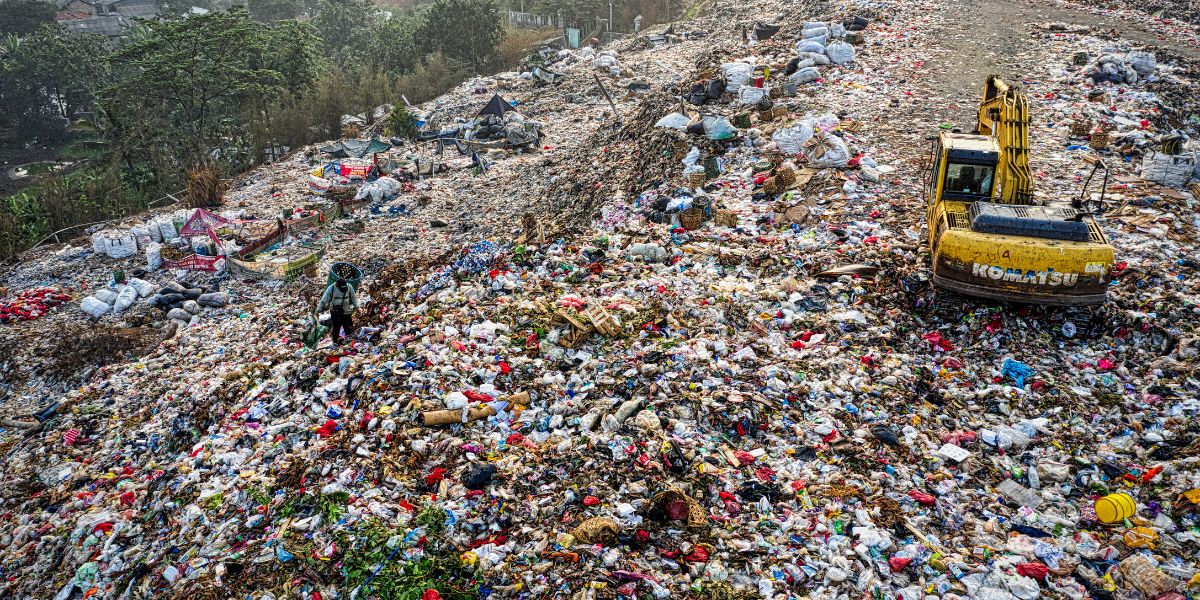
UK food waste contributes approximately 25 million tonnes of greenhouse gas emissions each year. When food waste decomposes in landfill without oxygen, it releases methane — a greenhouse gas the UN Environment Programme estimates to be approximately 80 times more potent than CO2 over a 20-year period. This is the core environmental reason why recycling food waste rather than landfilling it matters so significantly.
Economically, WRAP estimates the value of edible household food waste alone at over £17 billion per year. In the commercial sector, WRAP’s Guardians of Grub campaign calculates that food waste costs the UK hospitality and food service industry approximately £3 billion annually. These are not abstract figures — they represent real costs borne by real businesses, costs that can be substantially reduced through effective food waste recycling.
The UK has committed to halving food waste by 2030 in line with UN Sustainable Development Goal 12.3. The Government set an interim target of 20% reduction by 2025. These targets, combined with rising landfill tax rates and the Simpler Recycling mandate, have made 2025 a pivotal year for food waste management across every business sector.
The Law: Simpler Recycling 2025 and Food Waste
The Simpler Recycling regulations came into force on 31 March 2025, fundamentally changing the legal requirements for food waste management across England. Introduced under the Environment Act 2021 and implemented by DEFRA, the regulations require businesses and non-domestic premises to separate waste into distinct streams — and food waste is one of the most significant of these.
Who Must Comply
All businesses and non-domestic premises in England with ten or more full-time equivalent employees must comply. This includes restaurants, hotels, pubs, cafes, catering companies, schools, colleges, universities, hospitals, care homes, NHS Trusts, golf clubs, country estates, councils and any other organisation that generates food waste. Micro-businesses with fewer than ten FTE employees have until 31 March 2027.
The regulation applies to the organisation’s total headcount across all sites. A business with five locations employing two people at each still falls in scope because the total headcount exceeds ten.
What the Law Requires
Under Simpler Recycling, all food waste — defined as any food intended for human or household pet consumption regardless of whether it has nutritional value — must be separated from general waste and residual streams. It must not be placed in a general waste bin, a dry recycling bin or mixed with any other waste stream.
Once separated, the food waste must either be collected separately by a licensed waste carrier, or processed on-site through a permitted composting or treatment facility. On-site composting is explicitly permitted as an alternative to collection, provided it meets the requirements of an environmental permit or registered exemption under the Environmental Permitting (England and Wales) Regulations 2016.
Penalties for Non-Compliance
Non-compliance is enforced by the Environment Agency and local authorities. The EA issues compliance notices to non-compliant organisations. Failure to comply with a compliance notice is a criminal offence under the Environmental Protection Act 1990, carrying fines of up to £5,000 per offence on summary conviction. As of February 2026, the Environment Agency has also introduced charges of £118 per hour for enforcement work against persistent non-compliant organisations. Members of the public, customers and competitors can report non-compliant businesses directly to the Environment Agency.
The enforcement position is tightening throughout 2025 and 2026. Businesses that have not yet implemented compliant food waste separation are at increasing risk of enforcement action.
Methods of Food Waste Recycling for UK Businesses
There are three primary methods by which UK businesses can recycle food waste compliantly. The right choice depends on your business type, volume, available space, sustainability goals and cost profile.
1. In-Vessel Aerobic Composting (On-Site)
In-vessel aerobic composting is the most controllable and increasingly the most cost-effective method for commercial food waste producers. Food waste is processed within a sealed, temperature-controlled machine on your premises. Naturally occurring microorganisms break down the organic matter in the presence of oxygen, generating heat that raises the internal temperature to 60-70°C — sufficient to kill pathogens and weed seeds. The process converts food waste to usable compost typically within 24 hours.
The key advantages of in-vessel composting for businesses are: the food waste never leaves your premises as waste, eliminating the need for a food waste collection contract; landfill tax exposure on food waste is eliminated entirely; the compost output has genuine value for grounds, gardens and landscaping; and the process is fully enclosed with no odour, no pest attraction and no visible waste.
The Schnell Komposter range from 3rUrban covers capacities from compact units for small hospitality operations to large-scale machines for hotels, schools, hospitals and councils. To understand exactly how in-vessel aerobic composting works, including the biology behind the process and the differences from other treatment methods, see our dedicated technical guide.
2. Anaerobic Digestion (Off-Site Collection)
Anaerobic digestion processes food waste in the absence of oxygen, using microorganisms to break down organic material and produce two outputs: biogas (a mixture of methane and CO2 that can be used to generate electricity or refined into biomethane) and digestate (a nutrient-rich liquid used as agricultural fertiliser). The UK Government describes AD as its preferred treatment pathway for food waste because it recovers both energy and nutrients.
For most commercial businesses, AD is not an on-site option — it requires large infrastructure and is typically an industrial-scale process operated by specialist waste management companies. Businesses using AD as their food waste recycling route arrange separate collection of their food waste by a licensed carrier, who transports it to an AD facility.
The disadvantage for businesses of collection-based AD is ongoing cost dependency: you are permanently paying collection fees and exposed to landfill tax pass-throughs as rates continue to rise. You also have no direct control over what happens to your waste after it leaves your premises. And if your contractor’s AD facility changes its pricing or availability, your compliance and cost position can change with little notice.
3. Open Windrow and Centralised Composting (Off-Site)
Open windrow composting is used at large-scale facilities to process green and garden waste. It is less suitable for general food waste — particularly cooked food, meat and dairy — due to regulatory restrictions on the processing of animal by-products in open systems. Most commercial food waste from kitchens requires either in-vessel composting (which reaches the temperatures required to meet Animal By-Products Regulation standards) or anaerobic digestion.
For businesses producing primarily vegetable and raw fruit preparation waste with no cooked food or animal products, some centralised composting collection services may be available. Check with local licensed contractors for specific acceptance criteria.
How to Set Up Food Waste Recycling for Your Business
Whether you choose on-site composting or a collection-based route, the operational steps to setting up food waste recycling are broadly the same. Here is a practical framework.
Step 1: Audit Your Food Waste Volume
Calculate how many kilograms or tonnes of food waste your business generates per day or per week. Weigh your food waste bins for one week to get an accurate baseline. Identify which parts of your operation generate the most: kitchen preparation, plate returns, storage spoilage, event catering. This audit gives you the volume data you need to choose the right machine capacity or collection frequency — and to calculate your ROI.
3rUrban offers a free Commercial Composting ROI Calculator that uses your volume data to produce a personalised financial analysis of what on-site composting could save your business.
Step 2: Choose Your Recycling Method
If you generate more than half a tonne of food waste per week, have any space for a compact external unit, and want to eliminate collection costs and landfill tax exposure permanently, on-site composting is almost certainly the better financial choice over the medium and long term.
If you generate low volumes or have no space for any on-site infrastructure, a separate collection contract with a licensed carrier sending waste to an AD facility is the most straightforward route to compliance.
Step 3: Set Up Separation at Source
Place clearly labelled food waste collection points at every area of your premises where food waste is generated. In a kitchen: at preparation stations, cooking areas and the pass. In dining areas: at clearing stations. In bar areas: where food accompaniments are prepared. Make the right behaviour easy and the wrong behaviour obvious.
Step 4: Train Your Team
The most common failure in food waste recycling programmes is contamination — the wrong materials going into the food waste stream. Train all staff on what is in scope (all food), what is not (packaging, cleaning products, cutlery), and why compliance matters. Document your training so you can demonstrate due diligence if queried by the Environment Agency.
Step 5: Record and Report
Keep monthly records of your food waste volumes. This data supports ESG reporting, demonstrates compliance to regulators, tracks your progress against WRAP Food Waste Reduction Roadmap targets if you are a signatory, and gives you the evidence you need to quantify your sustainability credentials to investors, clients and the public.
Food Waste Recycling by Business Sector
The right food waste recycling solution varies by sector. Here is a sector-by-sector overview, with links to our dedicated sector guidance for each.
Hotels and Resorts
Hotels generate food waste from multiple points: restaurant kitchens, room service, bar food, event catering and staff canteens. A mid-sized hotel typically produces between 3 and 10 tonnes per month. The financial case for on-site composting is strong, and the sustainability story — hotel food waste becoming compost for the hotel gardens — is commercially valuable for ESG reporting and guest communications. See our full guide to commercial composting for hotels and resorts.
Restaurants and Hospitality Groups
The hospitality sector generates around 920,000 tonnes of food waste annually in the UK. Restaurants, pubs, cafes, catering companies and hospitality groups face significant Simpler Recycling obligations and rising disposal costs. On-site composting eliminates collection dependency and gives groups with multiple sites a consistent, controllable compliance solution. Read our full sector guide for composting for restaurants and hospitality businesses.
Schools, Colleges and Universities
All educational institutions with ten or more staff must comply with Simpler Recycling. Schools also benefit uniquely from on-site composting as an educational resource — the science of decomposition, soil health and circular economy principles are embedded in the national curriculum at multiple levels. A composting machine on a school site creates a learning asset as well as a compliance solution. See our dedicated guide to composting machines for schools and universities.
Healthcare and NHS
NHS Trusts and healthcare facilities have both regulatory compliance obligations under Simpler Recycling and net zero commitments under the NHS Green Plan. Hospital catering operations generate substantial volumes of food waste. On-site composting eliminates collection costs, supports Green Plan carbon metrics and simplifies the operational management of food waste across complex, multi-building sites. Learn more about commercial composting for NHS and healthcare.
Golf Clubs and Country Clubs
Golf clubs with active catering operations are required to comply with Simpler Recycling and are uniquely positioned to benefit from on-site composting because they have extensive grounds that can use compost directly. Kitchen waste becomes compost for fairways, tee boxes and ornamental areas, replacing purchased growing media. It is a genuinely closed-loop sustainability story. Read our guide to food waste recycling for golf and country clubs.
Country Estates and Stately Homes
Country estates operating event venues, holiday accommodation, farm shops or estate kitchens face the same Simpler Recycling obligations as other commercial food businesses. On-site composting aligns naturally with the land stewardship values of estate management and provides compost for estate gardens, kitchen gardens and grounds. Explore our solutions for commercial composting on country estates.
Councils and Public Bodies
Local authorities face food waste obligations both as employers operating their own catering facilities and as regulators overseeing business compliance in their area. Council-operated canteens, leisure centres, civic buildings and care homes all fall within scope. On-site composting machines allow councils to demonstrate leadership on food waste recycling within their own operations. See our guide for councils and public sector composting.
The Cost of Food Waste Recycling: Collection vs On-Site Composting
The financial comparison between collection-based food waste recycling and on-site composting is one of the most important calculations a UK business should make before choosing its approach.
Collection-based recycling involves ongoing costs that grow with landfill tax rates: typically £80 to £180 per tonne for collection, plus the landfill tax pass-through embedded in contractor pricing. At £126.15 per tonne for 2025-26, and with rates expected to rise in future budgets, this is a cost that increases year on year with no ceiling in sight.
On-site composting involves an upfront machine investment, offset by the elimination of food waste collection costs and landfill tax exposure. Most businesses with meaningful food waste volumes — half a tonne or more per week — recover the machine investment within 18 to 36 months and generate ongoing net savings thereafter. The compost output adds further value for businesses with land or grounds.
To calculate the specific financial case for your business, use our free Commercial Composting ROI Calculator, which uses current UK landfill tax rates and typical collection cost benchmarks to produce a personalised payback estimate.
Food Waste Recycling and ESG Reporting
For businesses with ESG reporting obligations — whether under TCFD, the WRAP Food Waste Reduction Roadmap, GRI standards or internal sustainability frameworks — food waste recycling is increasingly a required disclosure area, not just a voluntary aspiration.
On-site composting provides directly verifiable metrics: tonnes of food waste processed per month, volume of compost produced, carbon equivalents saved by diverting food waste from landfill. These are the concrete, quantifiable data points that sustainability reports require and that ESG analysts and investors expect to see backed by evidence.
Businesses that use external collection services for food waste recycling are dependent on their contractor for data — and many smaller contractors do not provide per-collection weight data as standard. On-site composting puts the measurement infrastructure within your own operation, giving you complete control over your ESG data and eliminating any gap between what you report and what you can verify.
The Schnell Komposter: On-Site Food Waste Recycling for UK Businesses
3rUrban is the UK distribution partner for the Schnell Komposter range of commercial in-vessel aerobic composting machines. Available in nine capacity configurations from the S-25 to the S-2000, the Schnell Komposter processes food waste on-site within 24 hours, producing nutrient-rich compost from all types of catering food waste including cooked food, meat, fish, dairy and preparation offcuts.
The machines operate without odour, without noise nuisance and within a compact footprint, making them suitable for installation in commercial kitchens, service yards, school grounds, hospital service areas, hotel back-of-house and any other commercial food waste environment. They require standard 415V 50Hz three-phase power and minimal maintenance by existing site staff.
Every Schnell Komposter installation by 3rUrban includes full commissioning, staff training and ongoing technical support. We work with businesses across every sector — hospitality, education, healthcare, golf, estates, councils and more — to specify the right capacity, manage installation and ensure the machine delivers the financial and compliance outcomes our clients need from day one.
To find out which Schnell Komposter model is right for your business, and to receive a detailed financial analysis of what on-site food waste recycling could save you, contact the 3rUrban team today or use our free ROI calculator.
Frequently Asked Questions: Food Waste Recycling UK
Is food waste recycling mandatory for UK businesses?
Yes. Since 31 March 2025, all businesses in England with 10 or more full-time equivalent employees must separate food waste from general waste and arrange for its separate collection or on-site processing under the Simpler Recycling regulations. Micro-businesses with fewer than 10 employees have until 31 March 2027. Non-compliance carries fines of up to £5,000 per offence.
What are the main methods of food waste recycling in the UK?
The main methods are: (1) In-vessel aerobic composting — food waste processed on-site in a sealed machine producing compost within 24 hours; (2) Anaerobic digestion — food waste collected and sent to an AD facility producing biogas and digestate; (3) Open windrow composting — large-scale facility processing of green and garden waste. On-site in-vessel composting is the most controllable and cost-effective solution for most commercial food waste producers.
How much does food waste recycling cost for a UK business?
Food waste collection costs range from £80 to £180 per tonne plus landfill tax pass-throughs at £126.15 per tonne (2025-26). Businesses investing in on-site composting typically eliminate both costs, recovering the machine investment within 18 to 36 months.
What is the difference between food waste composting and anaerobic digestion?
Composting breaks down food waste aerobically — in the presence of oxygen — producing compost, a nutrient-rich soil conditioner. Anaerobic digestion processes food waste without oxygen, producing biogas and digestate. Composting is well suited to on-site business applications in compact machines. Anaerobic digestion requires large infrastructure and is typically an off-site industrial process.
Can businesses compost food waste on-site in the UK?
Yes. On-site composting is permitted under UK regulations provided it meets environmental permit or registered exemption requirements under the Environmental Permitting (England and Wales) Regulations 2016. 3rUrban’s Schnell Komposter machines are designed to meet these requirements.
What types of food waste can be composted in a commercial composting machine?
All standard catering food waste including cooked food, raw vegetables and fruit, meat, fish, dairy, bread and coffee grounds. The high internal temperatures of 60-70°C during aerobic composting kill pathogens and meet Animal By-Products Regulation standards.
Which UK sectors produce the most commercial food waste?
The hospitality and food service sector generates around 920,000 tonnes annually. Schools, hospitals, golf clubs, hotels, country estates and councils are all significant commercial food waste generators with specific compliance and operational requirements for recycling.
