
In-Vessel Aerobic Composting Explained.
When people first hear that a machine can turn a day’s worth of restaurant kitchen waste — including raw meat, fish, dairy and cooked food — into clean, usable compost in just 24 hours, the most common reaction is scepticism.
It sounds too fast. Too clean. Too simple.
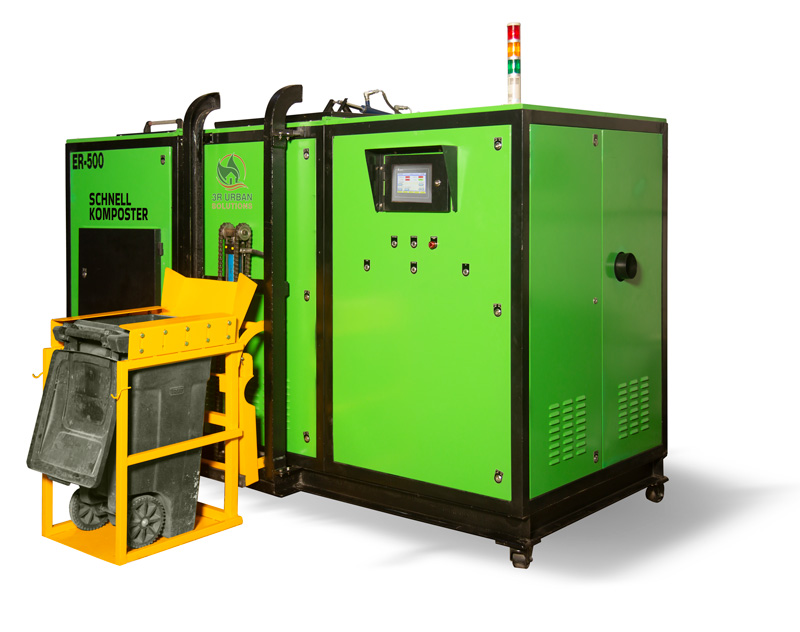
The science behind it is well-established and has been validated across 700+ commercial installations in 12 countries. In this article we explain exactly how in-vessel aerobic composting works, why the 24-hour cycle is achievable, and what makes the Schnell Komposter‘s commercial in-vessel aerobic composting approach particularly effective for commercial food waste applications.
Aerobic vs Anaerobic: The Fundamental Difference
All organic matter decomposes eventually. The question is how — and the answer determines the speed, the by-products and the environmental impact.
Anaerobic decomposition occurs in the absence of oxygen. This is what happens in landfill, in a sealed bin left too long, or in an anaerobic digestion plant. The process is slow and produces methane as a by-product — a greenhouse gas 80 times more potent than CO₂ over 20 years. It also produces leachate (liquid run-off) and hydrogen sulphide (the distinctive smell of rotting food).
Aerobic decomposition occurs in the presence of oxygen. This is what the Schnell Komposter uses. With oxygen present, a different set of microorganisms takes over — and they work dramatically faster. The primary by-products are water vapour and CO₂, both far less harmful than methane. There is no significant leachate and, when managed correctly, no unpleasant odour.
| Factor | Anaerobic (Landfill / AD) | Aerobic (Schnell Komposter) |
|---|---|---|
| Oxygen required | No | Yes |
| Primary by-products | Methane, CO₂, leachate, H₂S | Water vapour, CO₂, compost |
| Greenhouse gas produced | Methane (80× CO₂ potency) | Minimal — aerobic CO₂ only |
| Time to decompose | Months to years | 24 hours |
| Odour | Strong (H₂S, ammonia) | Contained — no external odour |
| Output | Digestate (AD) / landfill gas | Grade-A compost |
The Role of Thermophilic Bacteria
The key to the Schnell Komposter’s 24-hour cycle is a specific group of microorganisms: heat-resistant thermophilic bacteria.
The word thermophilic comes from the Greek for “heat-loving.” These bacteria thrive at temperatures between 45°C and 70°C — conditions that would kill most other organisms. The Schnell Komposter maintains its processing chamber at 55–65°C, which is the optimal range for thermophilic activity.
At these temperatures, thermophilic bacteria break down complex organic molecules — proteins, carbohydrates, fats — at remarkable speed. The same decomposition that might take a garden compost heap six months occurs in 24 hours. This is not a technological trick; it is biology working at its optimum.
There is an important additional benefit to these temperatures: pathogen elimination. At 55°C and above, human pathogens including E. coli, Salmonella and Campylobacter — all common in kitchen waste — are destroyed within minutes. This is why the Schnell Komposter can safely process raw meat and fish, and why the compost output is safe to use on kitchen gardens and food-growing areas.
The Four Stages of the 24-Hour Cycle
Stage 1: Loading and Mixing (Continuous)
Food waste is introduced through the loading door — 500×500mm on small models, 700×500mm on medium and large models. The Schnell Komposter’s rotating blades continuously mix incoming waste with the existing material in the composting chamber. This mixing serves two purposes: it ensures all waste comes into contact with the thermophilic bacteria already present in the chamber, and it aerates the mixture by introducing oxygen throughout the mass.
The machine can be loaded continuously throughout the operating day. There is no need to wait for a batch to complete before adding more — the process is genuinely continuous.
Stage 2: Heating and Evaporation (Hours 1–8)
Once loaded, the Schnell Komposter heats the mixture using its internal heating elements, controlled by Variable Frequency Drive (VFD) motors that optimise energy consumption based on the moisture content and volume of the load.
As the temperature rises toward 55–65°C, water evaporates from the food waste. This evaporation is significant: food waste is typically 70–80% water by weight. As the moisture content reduces, the effective volume of the material decreases substantially. This is the primary mechanism of volume reduction in stage 2, typically accounting for 60–70% of the total reduction.
The water vapour produced is directed through the exhaust pipe to a nearby drainage chamber. This is why the Schnell Komposter produces no leachate and no run-off water — all the moisture leaves as vapour through the dedicated exhaust, not as liquid through the base.
Stage 3: Microbial Decomposition (Hours 8–22)
With the chamber now at optimal thermophilic temperature and the moisture content reduced, the thermophilic bacteria enter their peak activity phase. They break down the remaining organic matter — the proteins, carbohydrates, fats and cellulose — into simpler compounds.
This stage achieves an additional 15–20% volume reduction through the decomposition of organic solids, bringing the total volume reduction to 85–90%. The output at this stage is dark, granular, near-dry material that has been transformed from food waste into soil amendment.
The automated sensors that monitor this stage include:
- Temperature sensors — maintaining the 55–65°C range throughout
- Motor overload sensors — detecting unexpected resistance
- Power fluctuation sensors — protecting the machine during electrical events
- Door sensors — preventing operation with the loading door open
These sensors allow the machine to operate safely overnight and unattended, without any operator supervision during processing.
Stage 4: Compost Collection and Reset (Hour 24)
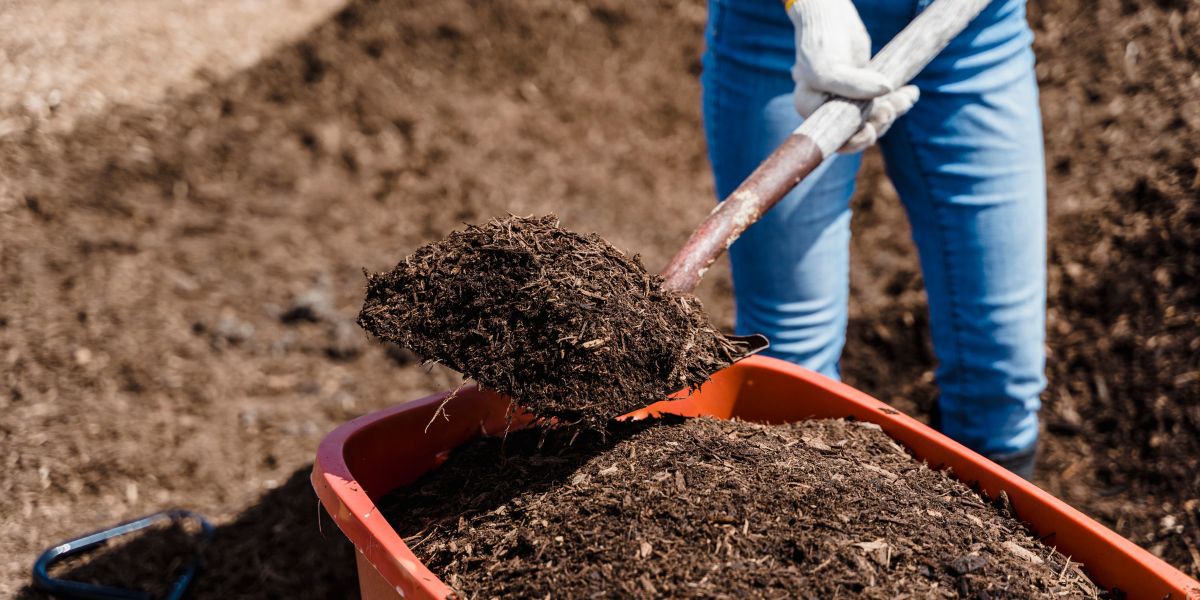
After the 24-hour processing cycle, the compost is discharged from the machine’s output port. The material is dark brown to black, crumbly in texture, with a clean earthy smell — characteristic of high-quality aerobic compost.
The HMI touchscreen logs the weight of compost produced, alongside the weight of waste loaded and the energy consumed during the cycle. This data is stored internally and can be uploaded to the cloud dashboard for sustainability reporting.
The machine then automatically resets its temperature and mixing parameters for the next cycle. There is no manual cleaning between cycles — the resident thermophilic bacteria colony remains in the chamber, ready to process the next day’s waste.
Why Is the Compost Grade-A Quality?
The quality of compost produced by the Schnell Komposter consistently meets the criteria for Grade-A compost under the UK’s BS PAS 100 quality standard. This is because:
- Pathogen elimination: the sustained temperature of 55–65°C destroys all human pathogens, weed seeds and disease organisms that might be present in kitchen waste
- Nutrient content: aerobic decomposition preserves nitrogen, phosphorus and potassium (NPK) in plant-available forms — unlike high-temperature incineration, which destroys these nutrients
- Stable structure: the 24-hour cycle produces a stable, mature compost that will not cause nitrogen drawdown when applied to soil
- No contaminants: the input is controlled — only food waste goes in, so the output contains no plastic, glass or other contaminants that can affect compost quality in municipal composting operations
What About the Smell?
The absence of odour is perhaps the most frequently remarked-upon feature by clients who have installed the Schnell Komposter. The sealed in-vessel design means that all gases produced during processing — including water vapour and the small amounts of CO₂ and volatile organic compounds generated in the early heating phase — are contained within the chamber and directed to the exhaust pipe.
The exhaust pipe connects to a nearby drainage chamber. There is no requirement for an odour control unit as standard — the sealed design eliminates the source of odour rather than treating it after the fact. For installations where an extra margin of odour control is desired (for example, indoor siting very close to dining areas), an optional odour control unit is available as an accessory.
What Cannot Be Composted?
The Schnell Komposter handles all organic food waste, but it is not a general waste processor. The following should never be introduced:
- Metal objects of any kind
- Plastic packaging or utensils
- Large bones (small poultry and fish bones are fine)
- Rocks, ceramics or glass
- Petrochemicals or cleaning products
- Any inorganic material
A simple kitchen-level sorting protocol — directing food waste into a dedicated caddy that feeds the machine — is sufficient to ensure only appropriate material is processed. This sorting takes approximately one minute of staff time per loading and quickly becomes routine.
Summary: Why the Schnell Komposter Works
The 24-hour cycle is not a claim — it is the result of combining three well-understood biological and engineering principles:
- Aerobic conditions, continuously maintained through mechanical mixing and aeration
- Thermophilic temperature range (55–65°C), which maximises microbial activity and eliminates pathogens
- Sealed vessel design, which retains heat and contains all by-products while preventing contamination
The result is a machine that processes all commercial food waste types in 24 hours, produces pathogen-free Grade-A compost, operates unattended overnight and generates no odour, leachate or liquid run-off.
If you would like to see the Schnell Komposter operating before deciding, we are happy to arrange a site visit to an existing UK installation, or to demonstrate the technology at your premises.
Sources: 3R Urban Solutions technical documentation. WRAP compost quality guidelines. BS PAS 100:2011 (compost quality standard). IPCC AR6 (methane global warming potential). Cornell Composting Science and Engineering (thermophilic bacteria reference). Specifications from official 3R Urban Schnell Komposter technical data sheets.